|
Hi Subscriber First Name! Welcome to Vanessa Priya Daniel’s October 24’ Newsletter͏ ͏ ͏ ͏ ͏ ͏ ͏ ͏ ͏ ͏ ͏ ͏ ͏ ͏ ͏ ͏ ͏ ͏ ͏ ͏ ͏ ͏ ͏ ͏ ͏ ͏ ͏ ͏ ͏ ͏ ͏ ͏ ͏ ͏ ͏ ͏ ͏ ͏ ͏ ͏ ͏ ͏ ͏ ͏ ͏ ͏ ͏ ͏ ͏ ͏ ͏ ͏ ͏ ͏ ͏ ͏ ͏ ͏ ͏ ͏ ͏ ͏ ͏ ͏ ͏ ͏ ͏ ͏ ͏ ͏ ͏ ͏ ͏ ͏ ͏ ͏ ͏ ͏ ͏ ͏ ͏ ͏ ͏ ͏ ͏ ͏ ͏ ͏ ͏ ͏ ͏ ͏ ͏ ͏ ͏ ͏ ͏ ͏ ͏ ͏ ͏ ͏ ͏ ͏ ͏ ͏ ͏ ͏ ͏ ͏ ͏ ͏ ͏ ͏ ͏ ͏ ͏ ͏ ͏ ͏ ͏ ͏ ͏ ͏ ͏ ͏ ͏ ͏ ͏ ͏ ͏ ͏ ͏ ͏ ͏ ͏ ͏ ͏ ͏ ͏ ͏ ͏ ͏ ͏ ͏ ͏ ͏ ͏ ͏ ͏ ͏ ͏ ͏ ͏ ͏ ͏ ͏ ͏ ͏ ͏ ͏ ͏ ͏ ͏ ͏ ͏ ͏ ͏ ͏ ͏ ͏ ͏ ͏ ͏ ͏ ͏ ͏ ͏ ͏ ͏ ͏ ͏ ͏ ͏ ͏ ͏ ͏ ͏ ͏ ͏ ͏ ͏ ͏ ͏ ͏ ͏ ͏ ͏ ͏ ͏ ͏ ͏ ͏ ͏ ͏ ͏ ͏ ͏ ͏ ͏ ͏ ͏ ͏ ͏ ͏ ͏ ͏ ͏ ͏ ͏ ͏ ͏ ͏ ͏ ͏ ͏ ͏ ͏ ͏ ͏ ͏ ͏ ͏ ͏ ͏ ͏ ͏ ͏ ͏ ͏ ͏ ͏ ͏ ͏ ͏ ͏ ͏ ͏ ͏ ͏ ͏ ͏ ͏ ͏ ͏
|
Welcome to my new newsletter! I’m a writer, organizer (of people & money), and a champion of effective women of color leaders. As an out and proud queer, mixed race (Sri Lankan & white), feminist, mother of two, I believe true freedom comes from love, courage, grassroots organizing, solidarity, sound strategy and clear boundaries with the unstrategic. I want us to be free. In this month’s newsletter: How to flank women of color leaders / How to make this election count at the ballot box and beyond / My core values for philanthropic work + key recommendations for giving in these times / News about my forthcoming book Unrig the Game: What Women of Color Can Teach Everyone About Winning
|
Three Ways to Make This Election Count by Supporting Women of Colors LeadersAs we head into the final weeks before the election, public enthusiasm for the Harris/Walz ticket is electric and momentum tremendous. The question now is how do we maintain it — not just to win in November, which is critical — to ensure that a Harris Administration is both empowered and held accountable to deliver real and significant improvements in people’s lives, from climate justice, to jobs, to reproductive freedom, to Gaza. One of the biggest generators of momentum for past democratic victories has been progressive women of color leaders. Conversely, one of the biggest drags on momentum has been the failure of liberals and progressives to have their backs. This time, we have an opportunity to do things differently and maintain full speed by bolstering these leaders.
|
“Too often we underestimate people's intelligence — their capacity to hold complex truths, and their distaste for political spin doctoring and fairy tales. We can both flank Harris, blocking for her against racist and misogynist attacks that come her way, and we can push her on the values and policies that reflect the will of our communities.”
|
|
Specifically, we can do three things: First, we can tell the whole truth about how powerfully WOC leaders have delivered for the promise of democracy. Four years ago, it was Black women, followed closely by other WOC, who kept the country from falling into fascism by beating Trump and delivering a democratic majority in the Senate. In a stunning show of moral clarity, Black women voted more decisively against Trump than any other group. Women of color as a whole are the country’s most progressive and civically engaged voting bloc with higher voter turnout rates than any other group. Second, we can block the hailstorm of white supremacy and misogyny that comes for WOC leaders. The 2020 wins were impressive, but the margin of victory was thin. There is no question that if more progressives had bolstered women of color leaders and intervened instead of being bystanders to the harsh conditions in which they worked, this margin would have been greater. The fact is: we could all have won more. How do we do a better job this time? And what exactly are we intervening on? Over the past year, while conducting research for a book, I interviewed over 45 of the most prominent and high-impact women of color social justice leaders in the United States. In talking with leaders from Congresswoman Pramila Jayapal, to the heads of major national organizations like LaTosha Brown of Black Voters Matter and Ai-jen Poo of the National Domestic Workers Alliance, to local community organizers, and movement elders, like the legendary United Farm Workers leader Dolores Huerta, it is clear that there are concrete things we can actively notice and disrupt:
|
|
The assumption of incompetence. The casting of Harris as a “DEI candidate,” is just one example of how this shows up. The considerable effort required to overcome this assumption wastes precious time and energy, and it weathers leaders unnecessarily. The requirement to mammy and prove likability. Too often WOC leaders are expected to provide a level of nurturing and emotional labor that is never required of other leaders. If they don’t, they are often labeled as cold or mean — designations that give people open license to further attack and discredit them. A zero-tolerance policy for mistakes (real or perceived). WOC leaders are put under a microscope where any error — real or perceived — risks a complete dismissal of their competence. Abandonment when there is an attack. When women of color leaders are attacked, they are often left in the wind, and their efforts to defend themselves are dismissed as hysteria or bitterness, which leaves them isolated.
|
|
Everyone wins more when these leaders can focus their full energy on the work. When we notice that a leader is assumed to be incompetent, asked to mammy, given no margin for error, or abandoned when attacked, we can speak up. We can stop standing by and letting it happen. When we see women of color leaders and organizations working effectively toward a multi-racial, feminist democracy, we can invest in them with our dollars, volunteer hours, and connections. From our dinner table conversations, to our workplaces, to our social networks and social media feeds, we have the power to show up better. Third, we can hold WOC leaders accountable. WHEN Harris wins — I’m saying it this way because I’m calling in that intention with everything I have — the left cannot cut its engines with another just-happy-to-be-in-the-room routine like we did with Obama. Too many progressives withdrew the external protest and pressure that could have created the political space for him to get more done for our communities — including the things he agreed with us on. We refrained from the critique that would push him (a centrist) on some key policies (like deporting more immigrants than any other sitting President). The right doesn’t take its foot of the gas when they get their people in office, they put the pedal to the metal to pass as much of their agenda as humanly possible. We can do the same. Too often we underestimate people's intelligence — their capacity to hold complex truths, and their distaste for political spin doctoring and fairy tales. We can both flank Harris, blocking for her against racist and misogynist attacks that come her way, and we can push her on the values and policies that reflect the will of our communities — for example, to keep negotiating for a ceasefire and return of all hostages, while stopping the use of our tax dollars to bankroll a genocide in Gaza. This is how we will win in November and beyond.
|
|
Do you have financial resources to invest in the building of a feminist, multiracial democracy? I made a video recommending groups that are doing outstanding electoral work you should consider donating to.
|
|
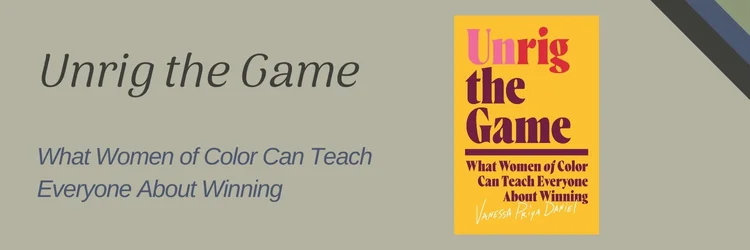
I wrote a book! Unrig the Game: What Women of Color Can Teach Everyone About Winning. A much-needed playbook to supporting and retaining women of color in leadership roles to create lasting change in the world (Random House, March 4, 2025.) Women of color have repeatedly demonstrated how essential they are in the battle for social and environmental change. From the streets to the ballot box and to Congress, no other demographic group in the nation stands up more strongly against hate and more clearly for freedom, climate action, and human rights. Yet when they are in leadership positions, women of color face persistent and unfair obstacles. For them, too often, the game is rigged.
|
|
In Unrig the Game: What Women of Color Can Teach Everyone About Winning (Random House; ISBN 978-0593596210; March 4, 2025; $32.00) author Vanessa Priya Daniel taps her extensive experience as a leader, organizer, and funder to articulate how to support effective women of color leaders so we can all win.
|
“A brave book and essential reading for everyone who wants progressive movements to win. A call to bring what has pommeled women of color leaders in the shadows, into the light of the public square, where it can be faced and changed.” – LaTosha Brown, Co-founder of Black Voters Matter and Southern Black Girls Consortium
|
|
If your organization or organizations you know would like to buy more than 25 books, you/they can email the request to contact@vanessapriyadaniel.com and the bulk buy team at Random House will be in touch with them for discount information. Other ways you can support: Follow me on Instagram, LinkedIn, Facebook, and Twitter and signal boost posts about the book by liking, commenting and sharing. If you would like to book a speaking engagement, please fill out the “Speaking Request” form on my website.
|
Core Values that Guide my Thinking on PhilanthropyPhilanthropy is one terrain on which we can practice coming into the right relationship with the planet, one another, and ourselves. For those who don’t have monetary wealth (and these are statistically the people who donate the most each year in the U.S.), giving is an ongoing practice of care and mutuality. For people of wealth or with decision making power over wealth, it can be this too, but it is also a way to move from greed to sharing, from control to supporting the self-determination of others, from centering oneself to centering the wisdom of directly impacted people with a track record of delivering real organizing power and material change for their communities. Done well, philanthropy can unravel the knot of extractive capitalism toward a future in which wealth inequality is a thing of the past, and a system that necessitates an economic underclass (raced, gendered, or otherwise othered human beings) no longer exists. Grassroots power is the engine of social change. None of the biggest wins in U.S. history — from women’s suffrage, to labor rights, to civil rights, to environmental regulation — would have been possible without it. Good organizing has one of the greatest returns on investment of any strategy because it produces activists and leaders who will remain engaged and deliver wins in scores of fights for progressive values well into the future. Grassroots organizing receives roughly 3% of philanthropic giving annually, and grassroots organizing training infrastructure has been steadily attacked and dismantled by the right, with the decline of unions, the demise of ACORN, the incarceration or assassination of many Black organizers, the erosion of organizing training programs. There is no work around to rebuilding/evolving grassroots organizing infrastructure, including hands-on organizing training. It is an imperative to winning. Sound strategy is essential. The right plays chess while too much of the left plays checkers, focused only on the next campaign, the next election, the next policy fight. We must increase access to training/education in short, medium and long-arc strategy development. This requires political education in movement history, the various ideologies that are operating in our society and movements, the interlocking systems of oppression, such as patriarchy, white supremacy, capitalism, colonialism, and how they exert themselves on different groups. It requires an awareness of the rising global tide of authoritarianism, its manifestations here in the U.S., and strategies and tactics that build the coalition strength — across different methods and ideologies — to successfully block it. There are several places helping people in movement to hone all of these skills. There is no such thing as a democracy in the U.S. unless it is a multi-racial, feminist democracy. The left’s willingness to throw women, people of color, and queer and trans people under the bus is one of the main reasons we are losing on key issues, including climate change and economic justice. When the right uses wedges like attacks on abortion access and trans kids to elect and empower their people, those people then vote and move against everything progressives care about. We must learn to walk and chew gum at the same time. That means understanding the interlocking forces of oppression and the tactics of divide and conquer. It means standing up against patriarchy, white supremacy, colonialism, and extractive capitalism simultaneously. It means funding groups that are doing this well: they are lighting the path towards freedom.
More soon on recommended groups to fund in each of these areas.
|
Writers! Many social justice writers have worked on their books at Mesa. This is a fantastic residency that I thoroughly enjoyed. I wrote part of Unrig the Game there! Their application window is open until November 1. The Democracy Frontlines Fund — I am a proud member of their Braintrust — just published their Year 3 / Phase I report. In yet another critical election year, the work of funder collectives like DFF are more important than ever. Black-led organizing is critical to building a future that is safe and inclusive of us all. Prentiss Hemphill’s new book What it Takes to Heal is an excellent offering to all of us working to heal ourselves individually and collectively in order to change the world. Maurice Moe Mitchell’s excellent piece on Building Resilient Organizations is now available as a zine & workbook! If you’re in nonprofit or movement spaces, this is a must-read to help you navigate this year (and years to come) with resilience and joy. I am so proud of my sister Aisha Nyandoro, featured in TIME magazine’s TIME100 Next list, which recognizes 100 emerging leaders from across the world who are shaping the future. Click here to check it out & support her work at Springboard to Opportunities.
|
|
Enjoyed this newsletter? Forward it to other people who might like it, and tell them to subscribe!
|
|
|
|